 By Miles Sinclair
Updated November 2026
An extendable dining table setting is easier to get right when you plan for the table’s final size from the start. This guide shows you how to measure the table in both its closed and extended positions, space place settings so every guest has room, and dress the table so it looks intentional whether you are seating four or fourteen. By the end, you will have a repeatable process you can run the night before any gathering.
Start by Measuring Both Table Sizes
Most extendable tables go from a compact everyday size to a full dining size by adding one or more leaves. Before you buy linens or pull out dishes, measure the table in its closed position and again with every leaf inserted. Write down both lengths and the width. Many people only measure the closed size and then discover their tablecloth falls short once the leaves are added.
Measure from edge to edge, not from leg to leg. Also note how far the leaves push the apron or the ends of the table, since some tables have a slightly different depth at the ends than the center.
What to Record
- Closed length and width
- Extended length with one leaf, and with all leaves
- Width of the table, which usually stays the same
- Height from the floor to the tabletop, for chair and cushion fit
- Any overhang you want on each end, usually 10 to 15 inches for a drop
Plan Seating Based on Full Extension
Standard dining place settings need about 24 inches of width per guest, measured along the edge of the table. A 36-inch-wide table seats two people per side comfortably, but three per side gets tight. Use the fully extended length to plan your headcount, then work backward to decide how many leaves you need for each gathering.
For a rectangular table, here is a rough guide that works for most standard dining chairs:
| Table Length (Extended) | Seats (Standard Chairs) | Layout Notes |
|---|---|---|
| 60 inches | 6 guests | Three per side, tight. Good for everyday with a leaf in. |
| 78 inches | 8 guests | Four per side with room for serving dishes in the center. |
| 96 inches | 10 guests | Five per side, or four per side with two chairs at the ends. |
| 108 inches or more | 12+ guests | Requires a full set of leaves and often a runner down the center. |
If you are seating a large group in a small room, a split layout can help. Our piece on Thanksgiving Seating: Table Layouts for Big Groups in Small Spaces walks through how to arrange extra seats without blocking walkways.
Set the Base Layer: Linens and Placemats
Lay your base layer before any dishes go down. Start with a tablecloth or runner sized for the extended table. A cloth that drops 10 to 15 inches on each side looks balanced. Too much drop can tangle with chairs, and too little makes the table look bare.
Steps for Laying the Cloth
- Insert all leaves and check that the table is level and locked.
- Place the tablecloth centered on the table, with the fold lines running down the middle.
- Smooth from the center outward, then check that the drop is even on both sides.
- Measure the drop at each end and adjust until they match.
- If using placemats, place them 2 to 3 inches from the table edge and about 18 inches apart for standard settings.
For choosing fabrics, see Best Tablecloths for Parties and Holiday Tables, which covers materials that hold up to repeated use.
Place Each Setting in Order
A consistent setting order makes the table feel calm and professional. Work from the outside in, starting with the plate and moving outward to the flatware and glassware.
Standard Formal Layout
- Dinner plate centered, about 1 inch from the table edge
- Salad plate or bread plate above the forks, upper left
- Dinner fork on the left, salad fork outside it if used
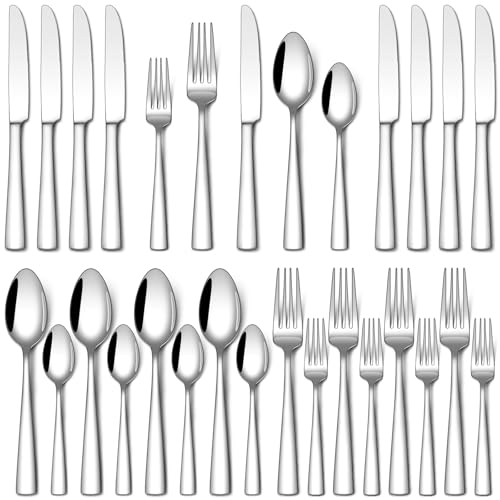
- Dinner knife on the right, blade facing the plate, spoon outside it
- Water glass above the knife, wine glass to its right
- Napkin on the plate or to the left of the forks
For casual gatherings, you can skip the salad plate and bread plate and place the napkin directly on the dinner plate. The main goal is consistency across every seat.
Plan the Center and Serving Areas
An extended table often has enough room for a centerpiece and serving dishes without crowding guests. Keep the centerpiece low, roughly under 12 inches tall, so guests can see across the table. Place serving dishes in a line down the middle, leaving at least 6 inches of space in front of each setting for plates. For more ideas that fit a long table, check Holiday Party Centerpiece Ideas: 9 Easy Designs for Any Table.
Common Mistakes
- Forgetting the leaves until the last minute. Leaves can be stiff or warped. Insert them the day before and confirm the table locks properly.
- Mismatched cloth drop. An uneven drop looks sloppy. Measure both ends.
- Crowded settings. If guests bump elbows, remove a chair or add a leaf rather than squeezing another setting in.
- Tall centerpieces. They block sightlines and make conversation harder.
- Ignoring the table’s height. Chairs that are too low or too high make the table feel off, even when the setting is correct.
Tips for a Smooth Setup
- Set the table the evening before and cover it with a clean sheet to keep dust off.
- Use painter’s tape or a marked paper template to check spacing on a practice run.
- Keep spare napkins and a stain remover nearby. How to Remove Party Stains From Table Linens covers quick fixes for wine and gravy.
- If you plan a drink station, place it on a side table rather than the dining table to free up space. See Setting Up a Coffee and Tea Station for Guests.
- Plan buffet-style meals with a separate serving table. Buffet Table Layout and Traffic Flow explains how to keep lines moving.
Recommended gear
A few supplies make extended table setups far easier to manage.
- Table leaf storage bag. Keeps extra leaves clean and protected between gatherings. View on Amazon
- Table pad with felt backing. Protects the wood and helps the cloth lie flat, especially on a long extended table. View on Amazon
- Wrinkle release spray. Quickly smooths linens right before guests arrive. View on Amazon
- Table runner in neutral tones. Covers the center of a long table without hiding the full length. View on Amazon
FAQ
How many leaves does an extendable table need for 10 guests?
Most extendable tables need two leaves to reach a length that seats 10 comfortably with standard chairs. Check the manufacturer’s listed extended length to confirm.
How far should the tablecloth hang over the edge?
A drop of 10 to 15 inches on each side is a common, balanced length. Keep the drop even at both ends.
How much space does each guest need at an extended table?
Plan about 24 inches of table edge per guest. More room is better if you have space, especially when serving dishes sit between settings.
Should I set the table before or after inserting the leaves?
Always insert the leaves first. Setting the table and then adding leaves can shift plates and glasses out of place.
Can I use placemats on an extended table?
Yes. Place them about 2 to 3 inches from the edge and keep them evenly spaced. Placemats work well with a runner down the center.
What height should a centerpiece be?
Keep it under about 12 inches tall so guests can see and talk across the table. Low arrangements and candles in short holders work well.
Do I need a table pad for an extendable table?
A pad is helpful for protecting the surface and keeping the cloth from slipping. Check your table’s care instructions for any recommended protection products.
Conclusion
A well-planned extendable dining table setting starts with accurate measurements of both the closed and extended table. Build the base layer with an evenly dropped cloth, place each setting in the same order, and keep the center low enough for conversation. With a repeatable process, you can set the table for four or fourteen with the same confidence.
About Miles Sinclair
Miles Sinclair is part of our editorial team and reviews and edits our holiday hosting guides, checking product details against manufacturer specifications and owner feedback.