By Miles Sinclair
Updated November 2026
Round dining table setting ideas come down to one goal: making every seat feel equal and every guest reachable. A round table has no head or foot, so your setup should be symmetrical, evenly spaced and easy to share. This guide walks you through the measurements, layouts and finishing touches that make a round table look polished without extra effort.
Measure Your Table and Plan Seating Space
Start with the table’s diameter, because it decides how many people fit comfortably. Allow roughly 24 inches of width per guest measured around the edge. A 48-inch round table seats four to six people, while a 60-inch table handles six to eight. Keep at least 36 inches between the table edge and any wall or sideboard so chairs can slide out without bumping.
Shopping for one? See our guide: 5 Best Tools for Setting Formal Dining Table Settings in 2026.
Next, decide where the centerpiece and serving pieces will sit. A round surface gives you the full middle, so a single low arrangement often works better than several tall items that block sightlines across the table.
Choose a Layout That Fits Your Table Size
Once you know your capacity, pick a base layout. These six patterns cover most situations:
- Single centerpiece: One low bowl or candle cluster, with place settings evenly spaced around the rim.
- Charger and rim plates: A charger at each seat, with dinner plates stacked on top when guests sit down.
- Runner-free, round placemats: Circular or woven mats in matching colors, which suit the table’s shape.
- Two-tone layering: A neutral base cloth with a contrasting topper, cut to hang evenly on all sides.
- Family-style serving: Platters set at intervals around the center, so every seat reaches two or three dishes.
- Lazy Susan centre: A rotating tray holding condiments and sides, freeing the rest of the surface for plates and glasses.
For more layout options by occasion, see Round Table Setting Ideas: 6 Layouts for Easy Hosting (2026) and Round Dining Table Setting: A Step-by-Step Guide for Hosts.
Place Each Setting Correctly
Work outward from the center in a consistent order, and keep spacing identical from seat to seat. Use these steps:
- Mark seat positions by dividing the table into even sections. For six guests, space them every 60 degrees.
- Set a dinner plate or charger 1 inch from the table edge at each mark.
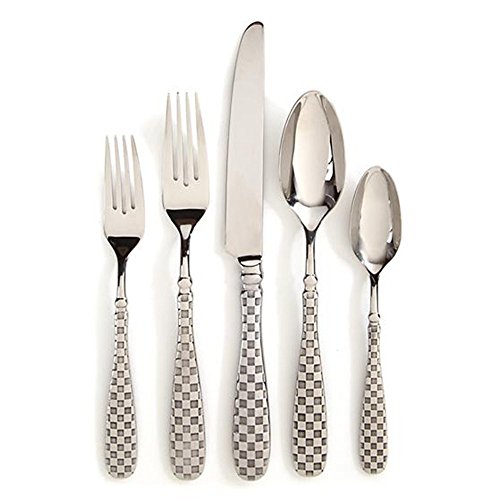
- Place the fork to the left of the plate, knife and spoon to the right, blade facing inward.
- Set the glass above the knife, and the bread plate above the forks.
- Add napkins to the left of the forks or on the plate, matching your chosen style.
Keep the outward edge of each setting roughly the same distance from the rim. This is the detail guests notice most when a table looks off.
Finish with Centerpieces and Lighting
Keep centerpieces under 12 inches tall so guests can see across the table. Candles work well here, but use flameless options or place them in sturdy holders at least 10 inches apart. Dim overhead lighting slightly and add a few lamps around the room, which softens the circular shape and creates a warmer feel.
Common Mistakes
- Crowding the table so that elbows touch. Leave at least 20 inches of width per guest.
- Using a tall centerpiece that blocks conversation.
- Forgetting that round tables need circular or square placemats, not long rectangular ones.
- Setting chairs too close to the wall, which makes getting seated awkward.
- Placing serving dishes unevenly, so one side of the table gets everything and the other gets nothing.
Recommended Gear
- Round woven placemats: They protect the surface and suit the circular shape without extra cutting. View on Amazon
- Lazy Susan turntable: It keeps shared dishes within reach for every guest. View on Amazon
- Glass hurricane candle holders: They keep flames contained and make a low centerpiece easy to build. View on Amazon
FAQ
How many people can sit at a round dining table?
Allow about 24 inches of edge space per guest. A 48-inch table comfortably seats four to six, and a 60-inch table seats six to eight.
What size tablecloth works best for a round table?
A round cloth that hangs 10 to 15 inches past the edge is a common choice. Measure the diameter and add twice the drop length to find the right size.
Should the centerpiece be large or small?
Keep it low, ideally under 12 inches tall, so guests can see and talk across the table easily.
Conclusion
Round dining table setting ideas work best when you measure first, choose a layout that matches your seat count and keep spacing even. Follow the placement steps, keep the centerpiece low and avoid the common mistakes above. With those basics in place, any round table will look balanced and welcoming.
Related reading
Ready to choose one?
About Miles Sinclair
Miles Sinclair is part of our editorial team and reviews and edits our holiday hosting guides, checking product details against manufacturer specifications and owner feedback.