Hosting an outdoor movie night is a memorable way to gather friends and family, but choosing and setting up the right projector can feel tricky. You need a projector bright enough to work after dark, a screen that stays put, sound that reaches everyone, and a safe power setup. This guide walks through everything you need to know to pick equipment and set up a comfortable, crowd-friendly outdoor cinema at home.
Brightness and Timing
The most important spec for an outdoor projector is brightness, measured in lumens. For a typical backyard gathering, you want a projector that delivers enough light so the image stays clear and vibrant once the sun goes down. A common rule of thumb is to look for a projector with at least 2,000 to 3,000 lumens for a screen size of 100 to 120 inches. Brighter is better, especially if you have ambient light from nearby streetlights or porch lights.
Timing matters. Plan to start your movie after full dark. Even a bright projector will struggle against dusk or twilight, and the image will look washed out. Check sunset times for your location and schedule the start of the film about 30 to 45 minutes after that. This gives guests time to arrive, grab snacks, and settle in while the sky darkens completely.
If you want to show something during the blue hour or early evening, consider a projector with a higher lumen count or use a screen with high gain (a surface that reflects more light back toward the audience). But for most home hosts, starting after dark is the simplest and most reliable approach.
Screens and Anchoring
You have several options for the screen itself. The most common choices for home hosting are inflatable screens, framed screens, and a plain white sheet or tarp. Each has trade-offs.
Inflatable screens are popular because they are self-contained. The screen is built into a frame that inflates with a built-in fan. They are easy to set up and take down, and they include their own anchoring system (usually stakes or sandbags). They hold their shape better than a loose sheet, but the large surface catches wind, so use every stake and tether the instructions call for. The downside is they require a power source for the fan, and they can be bulky to store.
Framed portable projector screens use a collapsible metal frame with a fabric screen that stretches tight. They are lighter than inflatable models and do not need constant power. However, they can be more finicky to assemble, and you need to anchor them well against wind. Use stakes through the frame’s feet into soft ground, or weigh the legs down with sandbags on a patio or deck.
A white sheet or tarp is the budget-friendly option. A white bed sheet stretched taut over a rope or PVC frame can work surprisingly well. The key is tension: any wrinkles or sagging will distort the image. You also need to anchor the frame securely. Use sturdy stakes or heavy weights at each corner. A sheet is more prone to flapping in the breeze, so choose a calm night or set up in a sheltered spot.
Whichever screen type you choose, always anchor it. Wind can knock over an unsecured screen, ruin the movie, and even damage equipment. Use the stakes or sandbags that come with the screen, or buy separate portable projector screens that include anchoring hardware.
Throw Distance and Placement
Throw distance is the distance between the projector lens and the screen. Every projector has a throw ratio, usually expressed as a range like 1.0 to 1.5. This number tells you how far back the projector needs to be for a given screen width. For example, a throw ratio of 1.0 means the projector needs to be 100 inches away to create a 100-inch wide image.
To figure out placement, measure your intended screen width (not diagonal). Multiply that width by the throw ratio numbers. If your projector’s throw ratio is 1.2 to 1.5, and you want a 100-inch wide screen, you need to place the projector between 120 inches (10 feet) and 150 inches (12.5 feet) from the screen. Check the projector’s manual for its exact throw ratio.
Place the projector on a sturdy table or tripod at the correct distance. Make sure the lens is level with the center of the screen or slightly below it. Most projectors have keystone correction to adjust for angled placement, but using keystone reduces image quality. It is better to position the projector straight on.
If you have a small yard, look for a short-throw projector. These have a throw ratio below about 1, meaning they can create a large image from just a few feet away. This also reduces the chance of people walking in front of the beam.
Sound for a Crowd
The built-in speakers on most projectors are weak and tinny. They will not fill a backyard with sound, especially if you have a crowd of 10 or more people. You need a separate sound system.
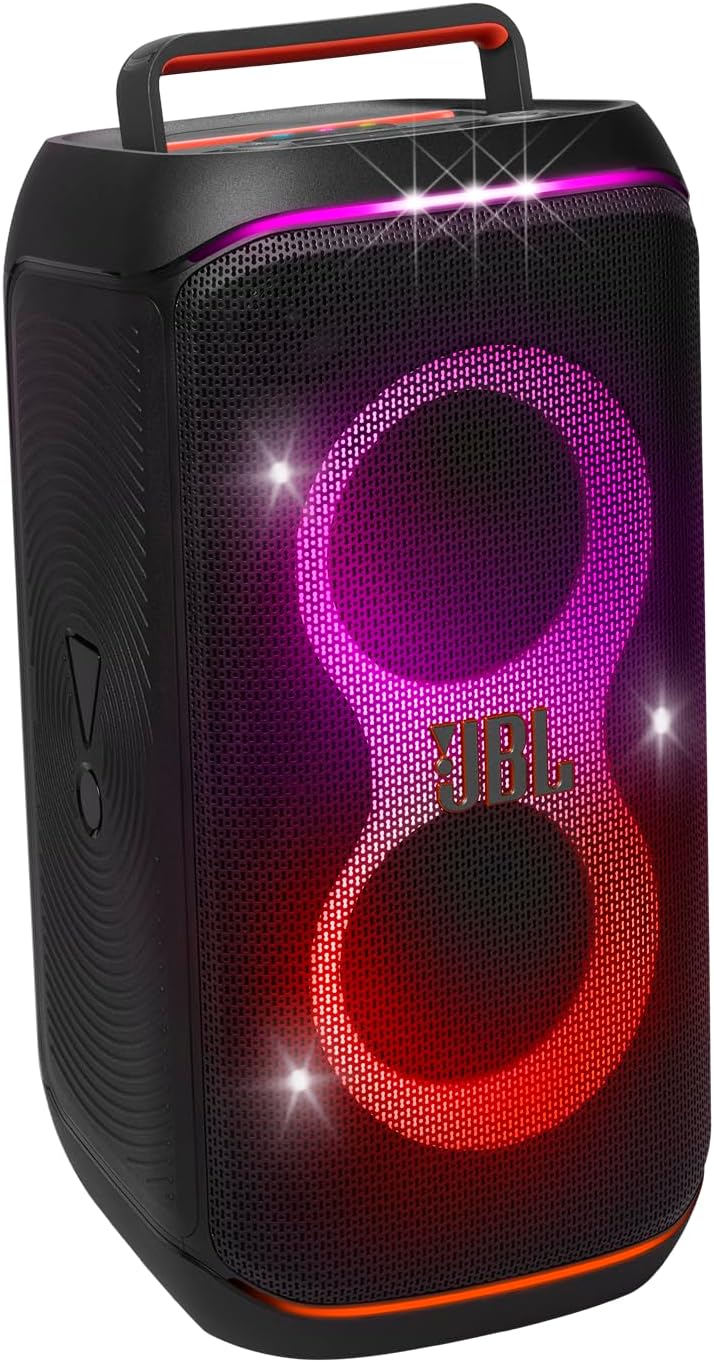
The best setup is a powered speaker placed near the audience, not behind the screen. A single portable Bluetooth speaker or a small PA speaker can work well. Position it at the front of the seating area, facing the viewers. This way, the sound comes from the same direction as the screen, which helps with lip-sync and immersion.
If you have a larger group, consider two speakers placed at the left and right edges of the seating area. Keep the volume moderate. Outdoor sound travels farther and can disturb neighbors, especially at night. A good rule of thumb is to set the volume so that someone sitting at the back of the seating area can hear clearly, but someone standing at the property line cannot.
Connect the speaker to the projector using a 3.5mm audio cable or Bluetooth. Wired connections are more reliable and avoid audio lag. If you use Bluetooth, test the sync before the movie starts. Some Bluetooth speakers introduce a delay that makes dialogue look out of sync.
Power and Cord Safety
Outdoor movie setups need electricity for the projector, the screen fan (if inflatable), and the speaker. Running extension cords outdoors requires careful attention to safety.
Use only extension cords rated for outdoor use. These have thicker insulation and are marked with a “W” on the jacket. Never use indoor cords outside. They can degrade in sunlight and moisture, creating a shock or fire hazard. Choose a cord long enough to reach from your house outlet to your setup without stretching tight. Coil any excess cord loosely to prevent tripping.
Plug all equipment into a ground fault circuit interrupter (GFCI) outlet. GFCI outlets shut off power if they detect a ground fault, greatly reducing the risk of electric shock. Outdoor outlets should be GFCI-protected; if you are running a cord from an indoor outlet, use a portable GFCI adapter or a cord with a built-in GFCI. Check the NFPA electrical safety in the home guidelines for more on outdoor cord use.
Keep all connections off the ground. Use a cord cover or a plastic bag to protect the plug connection from dew or rain. Elevate cords over walkways with a cord ramp or tape them down to prevent tripping. Do not run cords through puddles or wet grass. If rain is forecast, have a backup plan to move the party indoors or postpone.
For a cleaner setup, consider a outdoor extension cord that is bright colored or has LED indicators so it is visible in the dark.
Seating for Guests
Seating layout makes a big difference in how much your guests enjoy the movie. The goal is to give everyone a clear view of the screen without craning their necks.
Arrange seats in a gentle arc or semicircle facing the center of the screen. This keeps all viewers at roughly the same angle and distance. Avoid straight rows, which force people at the ends to watch from an extreme angle. The best viewing position is at a distance of about 1.5 to 2.5 times the screen width. For a 100-inch wide screen, that means seating between 12.5 and 21 feet from the screen.
Provide a mix of seating options. Lawn chairs, blankets, and cushions let guests choose their comfort level. If you have a large group, set up chairs in staggered rows so people in back can see over those in front. Leave a clear aisle down the middle for people to get to snacks or the restroom without blocking the projector beam.
Consider the projector beam itself. Place the projector off to the side or behind the seating area, not in the middle of the audience. If the projector is on a table, make sure no one sits directly in front of the lens. A short-throw projector placed near the screen can eliminate this problem entirely.
If you are hosting later in the evening, provide blankets or lap throws. Temperatures drop after sunset, even in summer. You can also set up a small table for drinks and snacks near the seating area to minimize trips back to the house. For more ideas on setting the mood with light, see our guide on outdoor party lighting.
Licensing and Neighbor Considerations
A common question is whether you need a license to show a movie at home. The answer is generally no, as long as the showing is for family and friends and is not advertised to the public. Showing a movie in your backyard for guests is considered a private home viewing. You do not need a public performance license. However, if you charge admission, advertise the event to the public, or show the movie in a commercial space like a community center, you would need a license from the film’s distributor. For home hosting, you are in the clear.
Be a good neighbor. Outdoor sound carries, and late-night movie noise can disturb people nearby. Keep the volume at a reasonable level, especially after 10 p.m. If you have close neighbors, let them know ahead of time that you are hosting a movie night. You can even invite them. Position the screen and speakers so the sound points away from neighboring houses. If you are using a subwoofer, consider turning it down or off to reduce bass that travels through walls and fences.
For more ideas on entertaining guests with audio, check our guide on hosting a karaoke night at home.
FAQ
Can I use a regular indoor projector outdoors?
Yes, as long as you protect it from moisture and keep it in a dry spot. Use a covered patio or a pop-up canopy. Do not leave it out in rain or dew. The projector itself is not weatherproof, so bring it inside after the movie.
What size screen do I need for a backyard movie night?
A 100- to 120-inch diagonal screen works well for most backyards with 10 to 20 guests. Measure your available space and choose a screen that fits without crowding the seating area. The screen should be large enough to see from the back row but not so large that viewers have to turn their heads to see the edges.
How do I keep bugs away from the screen and guests?
Dump standing water in the days before, run a fan near the seating (mosquitoes are weak fliers), and offer guests an EPA-registered repellent. Citronella candles and bug zappers do little against mosquitoes. Check the EPA repellent finder to choose the right product. Avoid spraying repellent directly on the screen, as some chemicals can damage the surface.
What if it rains on the night of my movie?
Have a backup plan. If you have a covered patio or garage, you can move the setup there. Otherwise, postpone to another night. Do not risk electrical equipment in rain. Rain can damage the projector and other electronics.
Hosting an outdoor movie night is about planning ahead and choosing the right gear for your space and crowd. Focus on a bright projector, a stable screen, clear sound, and safe power. With these basics covered, you can sit back and enjoy the show with your guests.